An evidence-graded guide for parents
What actually protects a child's sight — and what doesn't.
Daylight, screens, eye exams, glasses and myopia control — every claim rated by how strong the evidence behind it is, with the source one click away. Written by a father, checked against 250+ references.
Featured · Daylight and outdoor time
Two hours of daylight: the strongest evidence for protecting a child's sight
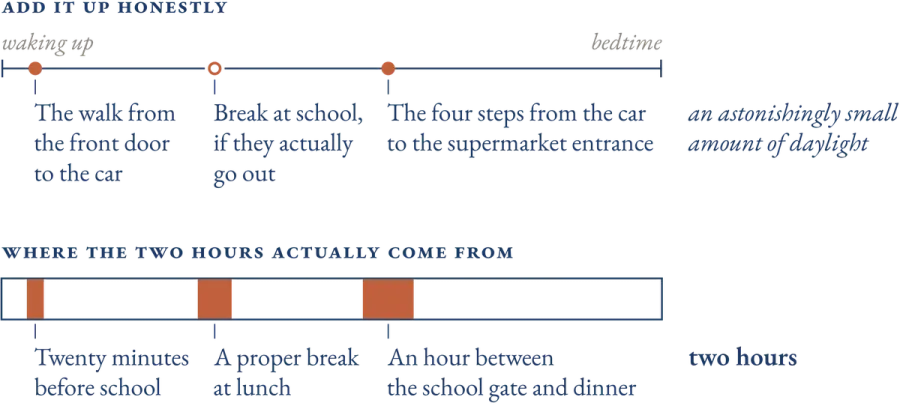
Around two hours a day outdoors lowers the odds of myopia starting. Why it must be outdoors, why shade counts, and where a school week hides the time.
Start here
Eight topics. Each one is a guide, then the detail.
01Myopia in childrenShort-sightedness is not a muscle that got tired. It is an eye that grew a fraction of a millimetre too long — and the whole fight is over that millimetre.02Daylight and outdoor timeThe best-evidenced thing a family can do to lower the odds of short-sightedness starting — and the most often misunderstood.03Screens, near work and breaksThe year I confused two different problems: tired eyes and a growing eye. Screens affect both, but not in the same way, and the fixes are different.04Warning signs and eye examsNobody announces that they stopped seeing the board. The signs are quiet, and a screening is a net with holes.05Myopia controlIf your child is already short-sighted, daylight is no longer the treatment. Four things bend the line, and this topic has nothing to sell you.06Glasses and the childWatch the wearing, not the frames. A prescription is only a treatment while it is on the face.07Habits and daily rhythmLet the room do the nagging. A desk, a lamp and a daily shape do more than two thousand reminders.08Food, supplements and mythsThe nutrition chapter I wrote before I read anything — and what the evidence actually supports.
Latest
Blue-light glasses for kids: what the evidence says Seventeen trials found blue-light lenses may make no difference to eye strain; the sleep effect is uncertain. Screens emit too little blue light to harm an eye. Getting a seven-year-old to actually wear their glasses Only four or five children in ten wear the glasses they are prescribed. Why a child refuses, what blur costs at a desk, and the fixes that actually work. How far should a child sit from a tablet, a book and a laptop? Books and tablets beyond 30 cm, laptops at 50 to 70 cm, a break every 20 to 30 minutes. Why closeness matters more than hours, and how to fix the desk tonight. Low-dose atropine for children: what it does, what it doesn't, and what to ask Low-dose atropine drops slow a child's short-sightedness, but the trials disagree on how much and which strength. What is known, what is not, and what to ask.